e-GMAT website revamp

This is just a display page and the full case study is coming soon.

e-GMAT is a GMAT-prep platform with one of the strongest track records in the category. I led an end-to-end redesign of the marketing site and built a new success-stories layer so prospective students can find themselves in the product, the proof, and the price.

The opportunity

Why this site had to be rebuilt

e-GMAT had a 12-year track record and one of the strongest results catalogues in GMAT prep. But the marketing site was speaking to people who already knew the brand. First-time visitors — the people the business needed to reach next — were landing on a page that asked them to translate aspirational language and a six-option price grid into a buying decision on their own.


Problem statement

Visitors couldn't find themselves on the page

The site didn't answer the four questions a prospective student arrives with:

  1. Is this for someone at my level?
  2. What does it actually cost?
  3. Can I trust these claims?
  4. What do I do next?

The substance was there. The surface forced visitors to work for it — or to leave and wait for a sales call.

Welcome before you sell

Make the first viewport reach a student at any starting point, not just one who already identifies as a high-achiever. Show faces and scores that look like their own future.

Verify, don't claim

Replace aspirational stats with specifics visitors can verify on platforms they already trust — GMAT Club, YouTube, Reddit. Credibility shifts from rhetoric to evidence.

Decide, don't compare

Collapse six pricing SKUs into three durations of one course. Reduce decision fatigue at the moment intent is highest, without hiding what's being bought.

I began thinking of the marketing site not as a brochure to scroll, but as the conversation sales used to have.

I led the redesign end-to-end - repositioning, information architecture, content system, copywriting, and visual design - across three surfaces: the homepage, the pricing page, and a new success-stories section that did not exist before.

The redesign isn't five separate improvements. It's a single shift carried across surfaces: from asking visitors to trust claims, to showing them structure, faces, and verifiable numbers.

3.1Repositioned the hero from gatekeeping to inclusive

"We coach achievers" became "Transform your GMAT score, no matter where you begin." Real student score cards moved into the first viewport — so visitors see faces and scores they can identify with before they see a feature.

Drag the slider to compare before and after. Use the buttons above to view either page in full screen.

3.2Restructured the homepage into six clear pillars

A loose feature list became Planning, Learning, Tracking, Practice, Analytics, and Mocks. Each pillar gets a focused section with a real product screenshot, so visitors can map their concern to a feature without scanning the whole page.

Post-
launch
25%up from 15%

Visitor return rate climbed — visitors had a reason to come back when they could find specific information instead of re-scanning the same wall.

3.3Collapsed pricing from six options to three

Two formats × three durations became one course × three durations, reframed as "Same course, different durations." Added a 7-day money-back guarantee in the same band.

Drag the slider to compare before and after. Use the buttons above to view either page in full screen.

Post-
launch
50%up from 45%

Cart-to-purchase rate lifted — by the time visitors added a course to their cart, the messaging had done the convincing. The price card no longer had to carry the whole argument.

3.4Built a new browsable success-stories layer

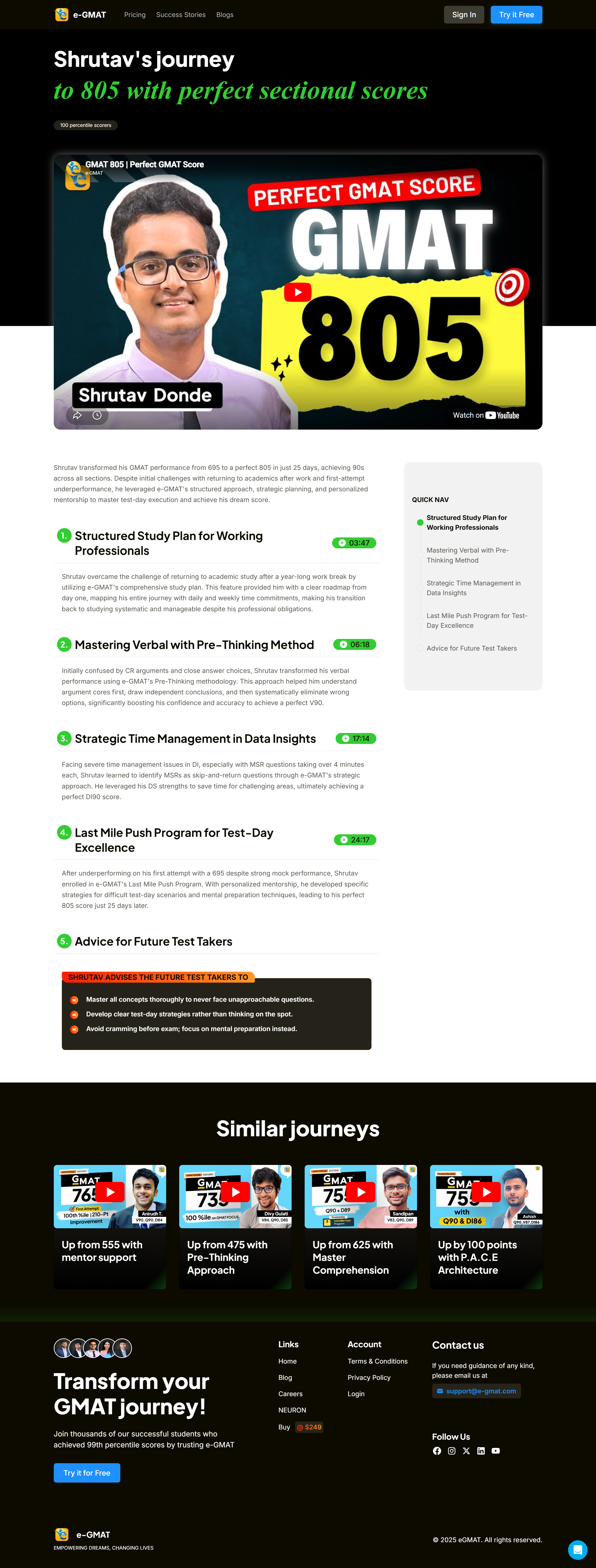
Created a filterable index by scorer profile — 100th percentile, 705+, starting below 535, sub-60-day improvements, 150+ point gains, sectional wins — with a dedicated page per student (video, strategy breakdown, similar journeys). "Trust us" became "here's someone like you."

Drag the slider to compare before and after. Use the buttons above to view either page in full screen.

3.5Rebuilt proof from aspirational to verifiable

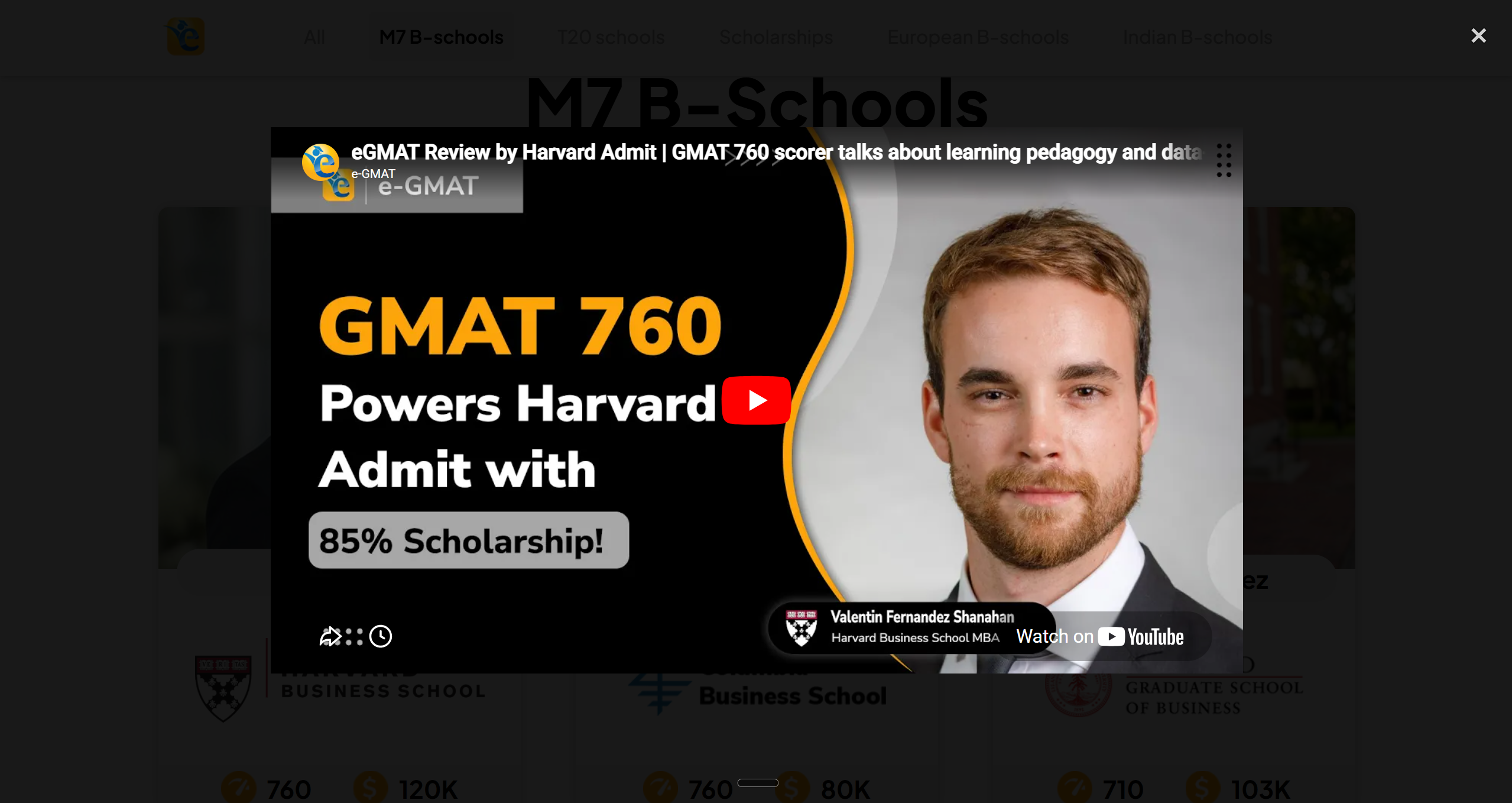
Replaced broad claims like "$200M+ in scholarships" with specifics the site can show: "70% Record Verified," "675+ scores reported in 2025," and #1 ratings on GMAT Club, YouTube, and Reddit. Credibility now rests on what can be demonstrated, not what can be asserted.

BeforeAfter
"We coach achievers"
"No matter where you begin"
Loose feature list
Six structured pillars
Six pricing SKUs
Three durations of one course
Aspirational claims
Verifiable proof + platform ratings
No success-story layer
Browsable index, page per student