Personalized Study Planner —
a GMAT plan built around you

The Personalized Study Planner turns a student's target score, current ability, and weekly hours into a milestone-driven GMAT prep path. I designed the product end-to-end — the planning intelligence made usable, the setup flow, and the execution calendar it feeds.

The opportunity

Why this product had to exist

Every planning tool on the market handed students the same plan: a 3-month or 6-month cookie-cutter schedule keyed to nothing but a start score and a target. None of them looked at where a student actually stood inside each section, which gains were cheap and which were expensive, or how many hours a weekday really offered versus a weekend. Planning was the one part of GMAT prep nobody had personalized.
Problem statement

What students were struggling with

Three questions, every single day:

  1. What should I study today?
  2. Am I making progress?
  3. When will I be ready for the test?

Students burned hours deciding what to do, had no checkpoint that told them whether effort was becoming ability, and picked test dates by guesswork. And when life happened — sickness, work deadlines, travel — the plan broke and they started over.

Personal means subsection-deep

Personalization that stops at "your target is 715" is still a template. This plan reads strengths and weaknesses subsection-deep and builds a path of least resistance — ambitious targets where the student is strong, foundations-first where they're weak.

Answer the three questions

Every surface in the product answers one of the three questions students actually ask — daily tasks they wake up to, checkpoints that grade whether effort became ability, and a test date that is a calculation rather than a guess.

A plan that survives real life

Rigid plans break; flexible plans adapt and win. This plan absorbs sick days, work crunches, and fast or slow weeks without sending the student back to square one — adaptation is what makes the plan worth trusting.

Every prep company handed out schedules. Nobody built strategy — a plan that reads the student, checks the progress, and bends with life. The Personalized Study Planner is that strategy.

The Personalized Study Planner takes three inputs — where the student stands, where they want to reach, and the hours their week can actually give — and turns them into a day-by-day path to the target score. Every decision below exists to keep that path personal, checkable, and alive.

3.1Built every plan on a path of least resistance

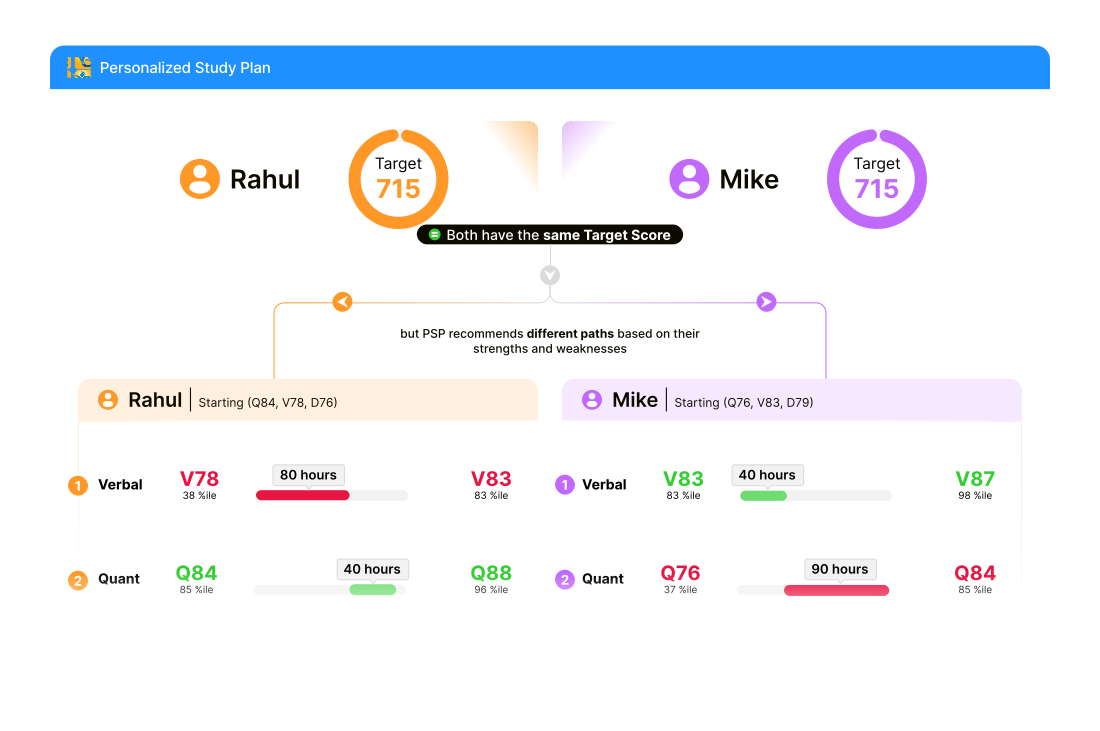
Strong in Quant at Q84? The plan sets an ambitious Q88 and 40 hours to excel. Weak in Verbal at V78? A realistic V83 and 80 hours to build foundations first. Another student gets the exact opposite plan for the same goal — strengths are leveraged, weaknesses are protected, and effort goes only where it moves your score.

Two students with the same goal receiving opposite plans, built from their sectional strengths and weaknesses.

Same goal, opposite students, opposite plans — strengths are pushed ambitious, weaknesses get foundations first.

3.2Broke success into checkpoints you can actually check

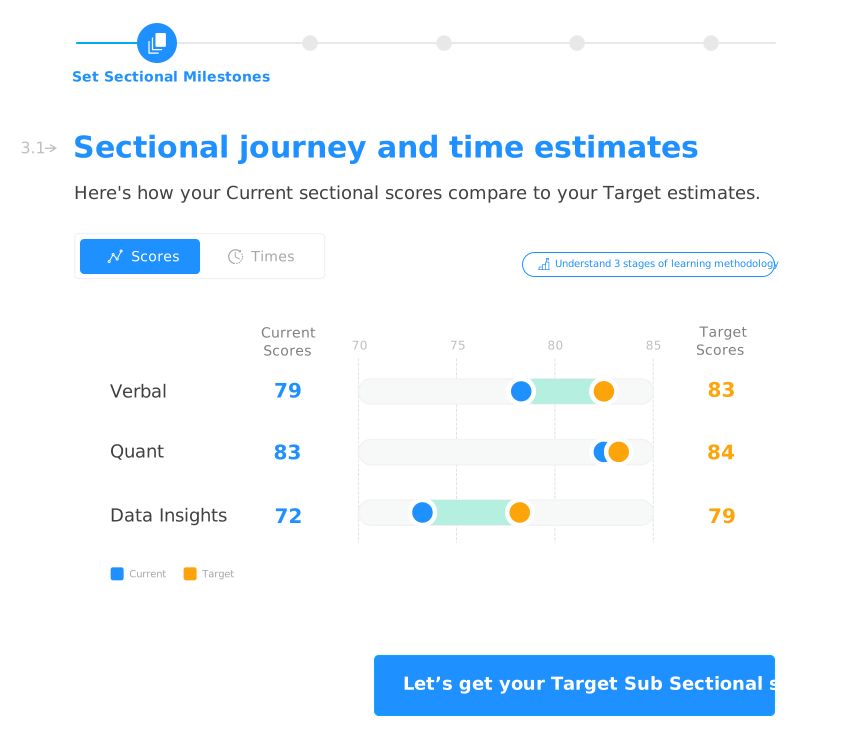
"Am I making progress?" dies as a question when success is defined at the subsection level. The plan sets exact milestones and accuracy metrics per subsection — push the areas where the student naturally excels to the top percentiles, hold the weaker ones at achievable targets — so reaching the goal becomes a matter of execution, not luck.

PSP — Milestones and journeys
PSP sectional milestones with score targets and hours per milestone.

Each section's climb is staged into milestones with exact score targets and hours.

3.3Turned "when should I take the test?" into a calculation

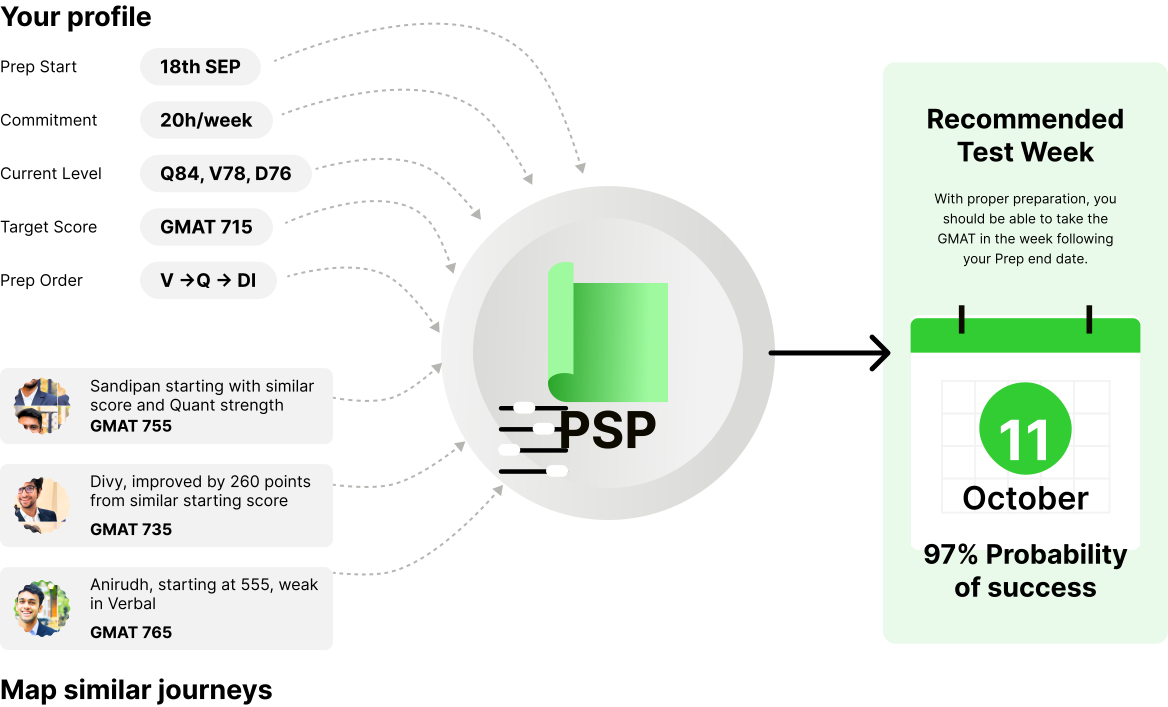
Not a guess — a calculation. The planner profiles the student across 25+ data points (daily commitment, current abilities, targets, preparation order), compares that profile against thousands of successful e-GMAT students who started in the same place, and recommends the test week with the highest probability of success. If 45 days is enough, it says 45 days; if four months, it says that.

PSP test-date prediction built from the student's profile, alongside successful e-GMAT students.

The recommended test week, derived from the student's own data points. The students pictured are e-GMATers — I don't own the rights to their photographs.

3.4Made waking up the easiest part of prep

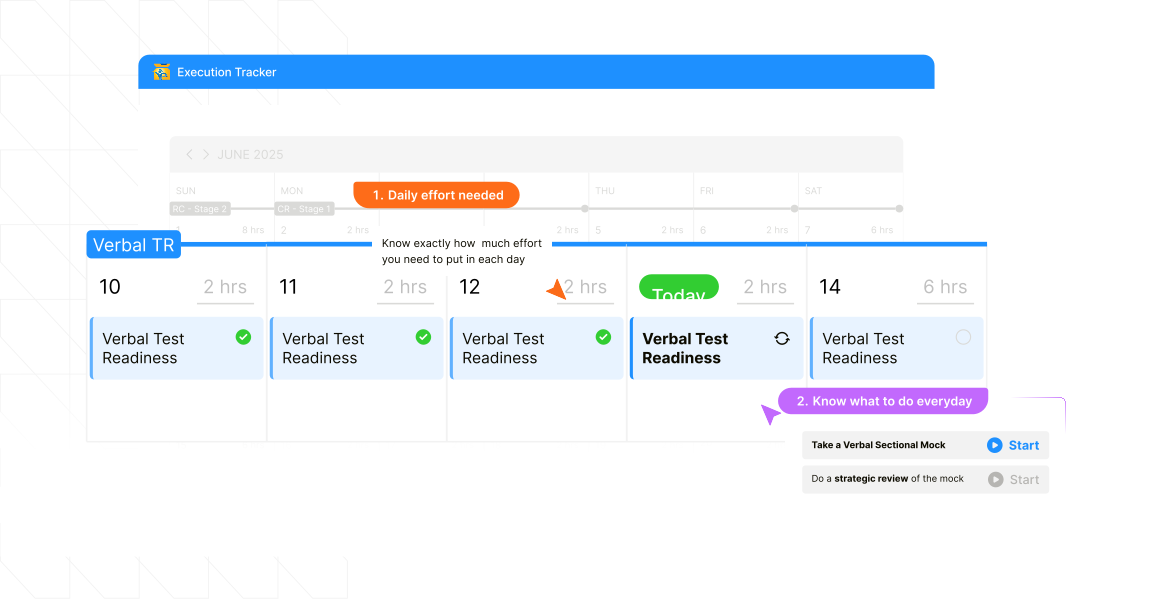
The plan converts into days: each section's journey breaks into three stages — Learning, Cementing, Test Readiness, like levels in a game — and each stage into daily tasks. The student wakes up to "today: this module, this quiz, these five questions." And because this is a surface someone opens every single day, a focus mode strips everything but the current week.

PSP daily task detail: what to study today, for how long, in what order.

One day, fully answered — what to study, for how long, in what order.

3.5Graded every step and flagged the drift

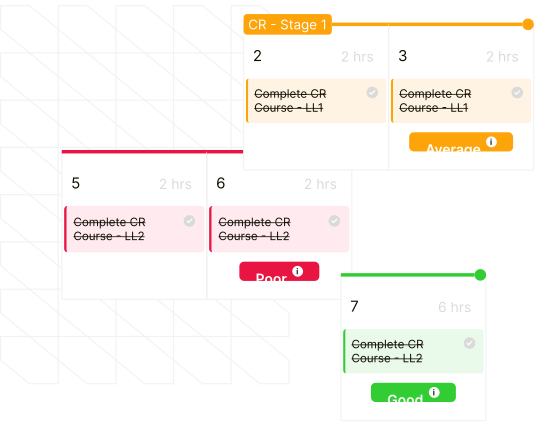
Completing tasks isn't mastering concepts, so the tracker grades each activity — good, proceed; average, revise first; poor, redo — and the calendar carries the verdicts. Fall behind or skip ahead, and color-coded alerts flag the deviation the moment it happens. It works like a GPS: it won't drive for you, but you never drift off course without knowing.

PSP grading states: every activity graded good, average, or poor, with the verdict carried on the calendar.

Done isn't enough — every activity comes back graded: good, proceed; average, revise; poor, redo.

3.6Handed the student the levers — through a conversation, not a form

The plan runs on the student's reality: daily hours, prep sequence, test-date preference. But that's 10–12 inputs, and a long form would lose them. So the setup asks one thing at a time, confirms each step ("the target is set — now let's talk about your current score"), and shows progress visibly building. Every lever arrives as a recommendation with its reasoning shown upfront — the default is trustworthy, the edit is informed.

PSP — The setup conversation
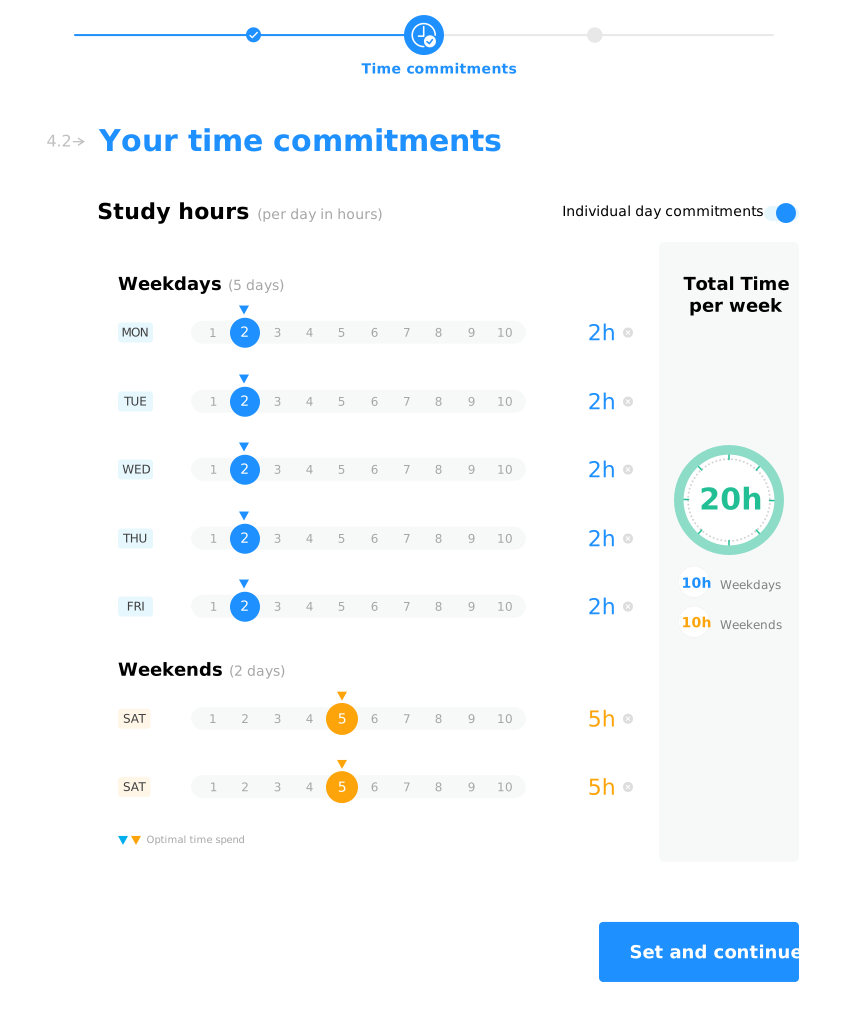
PSP screen collecting weekday and weekend study hours.

Weekday and weekend hours are set separately — the plan respects real weeks.

3.7Designed for the week that goes wrong

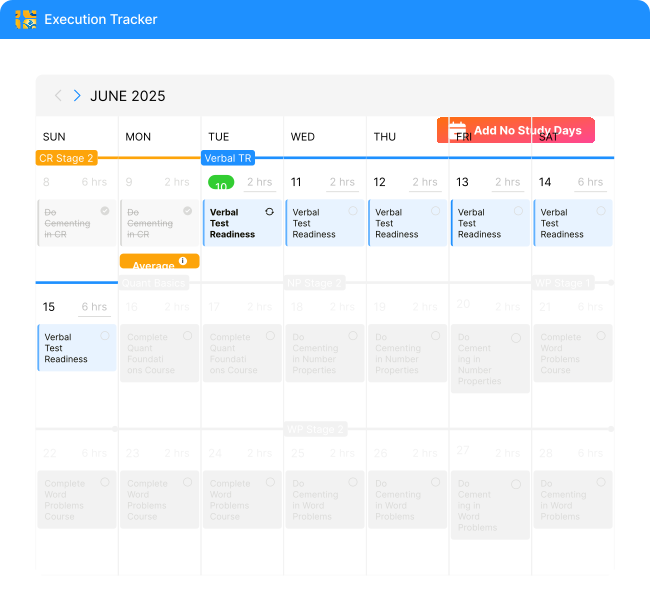
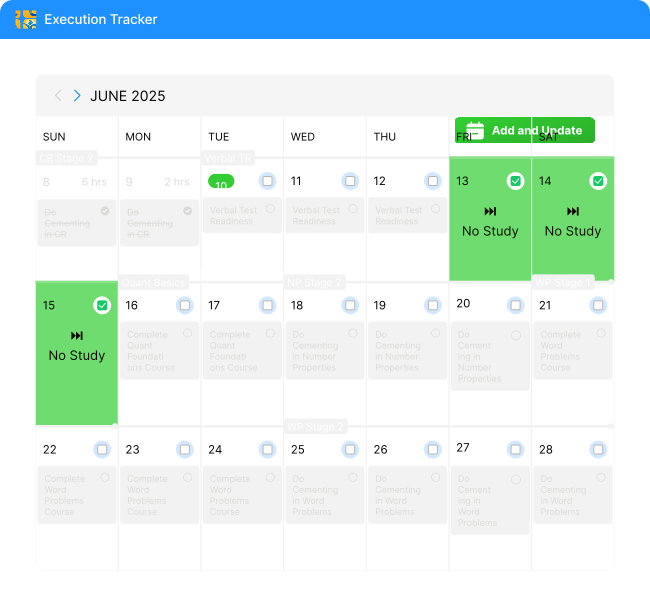
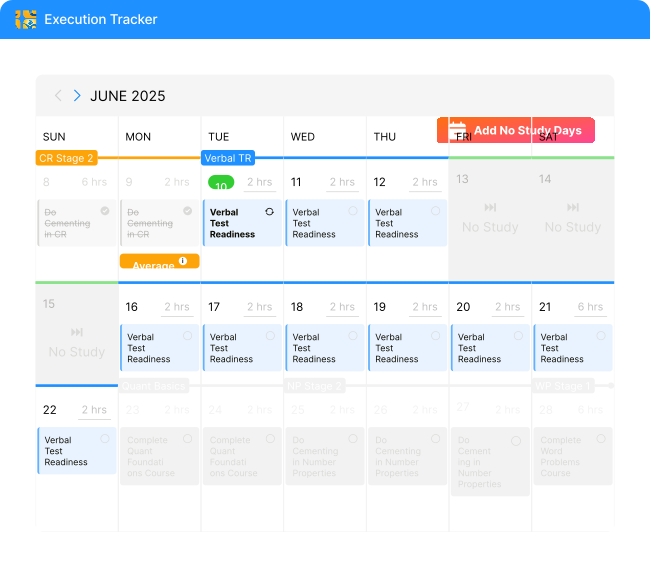
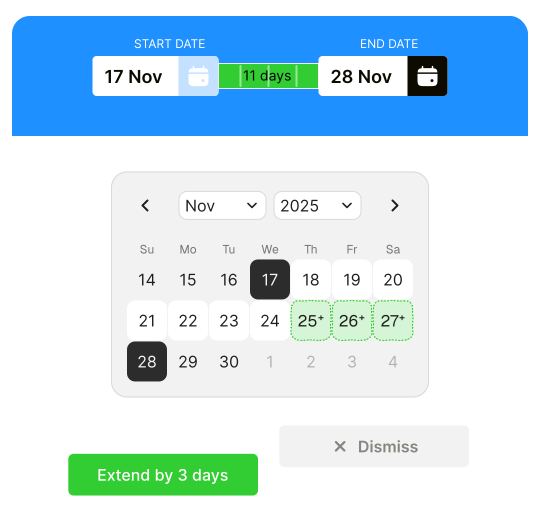
Life happens — sickness, a quarter-end crunch, a visit home — and that's exactly where every other plan died. Here the student adds "no study" days; the tracker re-analyzes the data points and recalculates the optimal path to the target in seconds. Replanning is a click, not a restart.

PSP calendar with the "Add no study days" action highlighted.

Life happens — "no study" days are a first-class input, one click from the calendar.

3.8Let the plan move at the student's rhythm

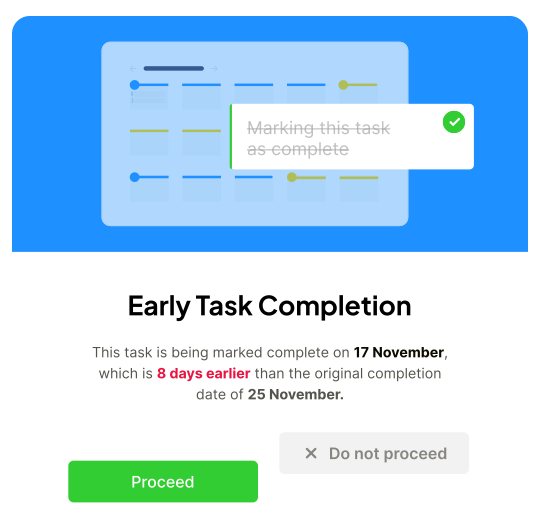
Mastered a concept in 90 minutes instead of two hours? Mark it done and the next task unlocks now. Need more time on a stubborn module? Push the task out and the upcoming work redistributes smoothly. The timeline belongs to the student's cognitive rhythm, not to a calendar — quality understanding beats rushed completion.

PSP pulling upcoming work in after a task is completed early.
Mastered it in 90 minutes instead of two hours? The next task unlocks now.
PSP pushing a task out and redistributing the upcoming schedule.
Need more time on a stubborn module? Push it out — upcoming work redistributes smoothly.

Mastered it in 90 minutes instead of two hours? The next task unlocks now.

Students who used the planner keep pointing at the same things it was designed for — a path mapped out from the first mock to test day, and a daily milestone to wake up to.

These videos were recorded by students who used e-GMAT and are used here as supporting content; I don't own the copyrights — all credits go to e-GMAT. Quotes are transcribed from the videos, and emphasis is mine.

The study plan really mapped out everything that I had to do from the day I took the mock until the day I would give the actual exam… it also highlighted the parts which I need to focus on, so that I wouldn't waste time on something which would be a strength.
Shrutav Donde
GMAT 805 — video testimonial
One of the factors was definitely the study plan that we receive as soon as we sign up… they provided me a daily planner kind of a thing, so I had a milestone to achieve every day.
e-GMAT student
GMAT 675 — video testimonial
The study plan really mapped out everything that I had to do from the day I took the mock until the day I would give the actual exam… it also highlighted the parts which I need to focus on, so that I wouldn't waste time on something which would be a strength.
Shrutav Donde
GMAT 805 — video testimonial
One of the factors was definitely the study plan that we receive as soon as we sign up… they provided me a daily planner kind of a thing, so I had a milestone to achieve every day.
e-GMAT student
GMAT 675 — video testimonial